PROBLEM
METHOD
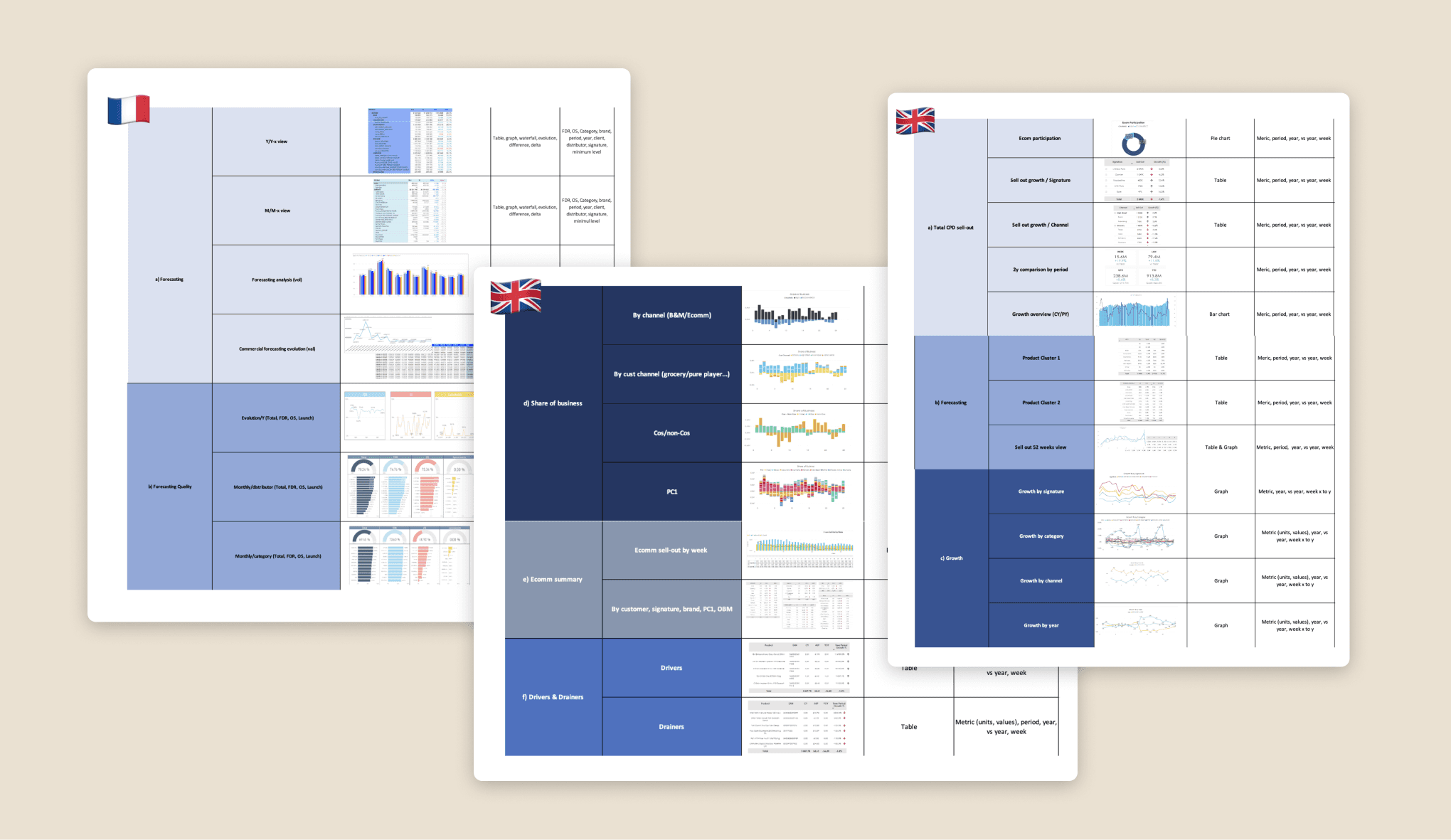
Needs Assessment: We began by conducting a thorough needs assessment to understand the specific requirements and pain points of different departments and regions. This involved interviews with key stakeholders, data analysis, and a review of existing systems and processes.
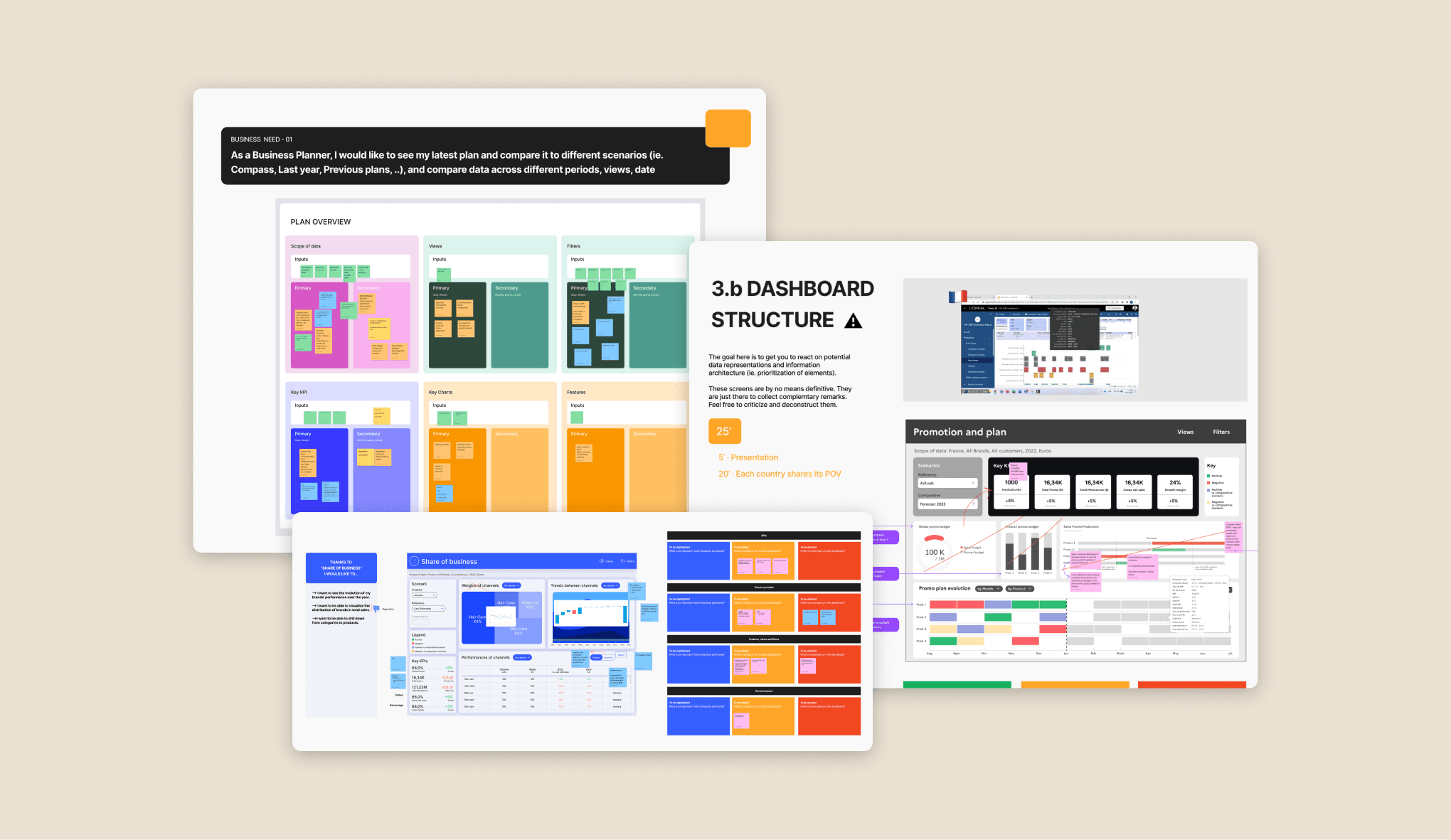
Data Design Workshops : We facilitated a series of collaborative data design workshops with specific use cases. These workshops included a series of activities to ensure that the final product answered the company's key questions and enabled users to make crucial decisions based on the information available to them.
Information and UX Design best practices: Using a human-centered approach, we influenced the way data is displayed and understood to better meet user needs - which ultimately lead to better business decision making.
TOOLS
REGIONAL LEADERS INTERVIEWS
CO-CREATION WORKSHOPS
BUSINESS ANALYSIS
UX CONCEPTION
CHANGE MANAGEMENT
AGILE METHOD
METHOD ILLUSTRATIONS
OUTPUTS
RESULTS
03
Regions involved throughout the process. An opportunity to collect field-based inputs and guide design-led approaches.
+10
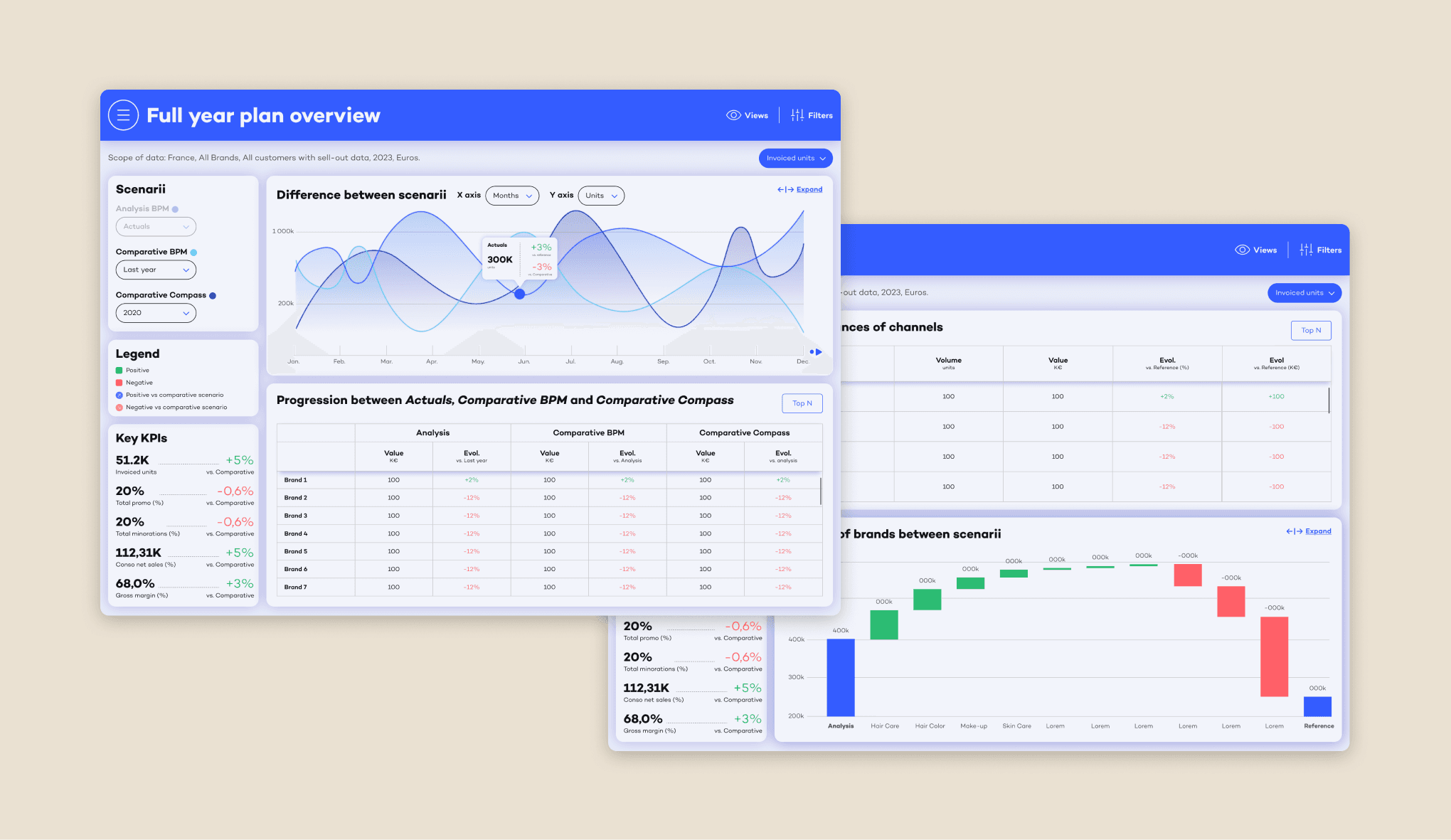
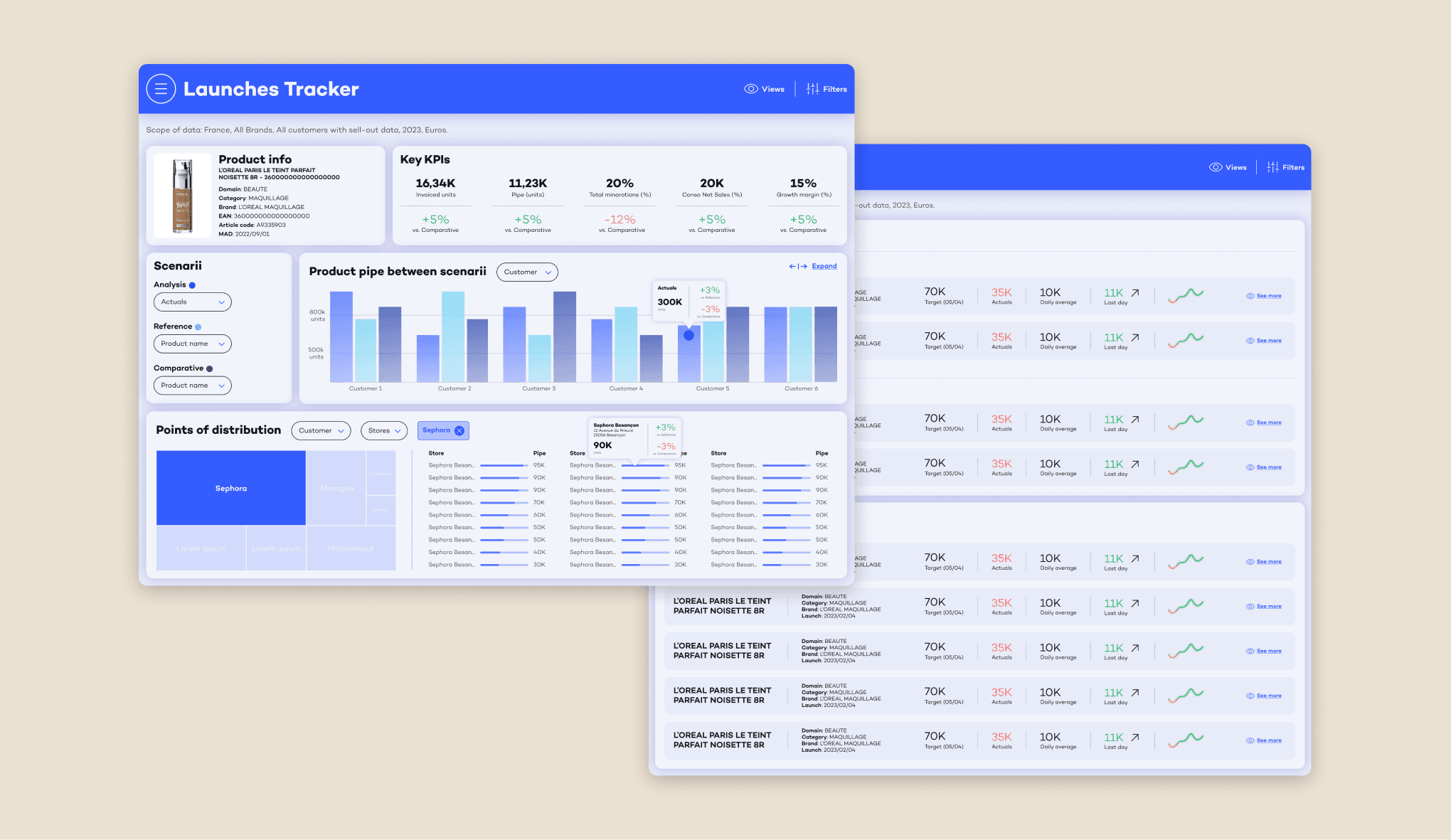
High-fidelity designs and prototypes generated, and refined through iteration, to serve as a blueprint.
01
A starting point for user-centered dashboard and report design, that reflects in-depth understanding of user needs and key business issues.